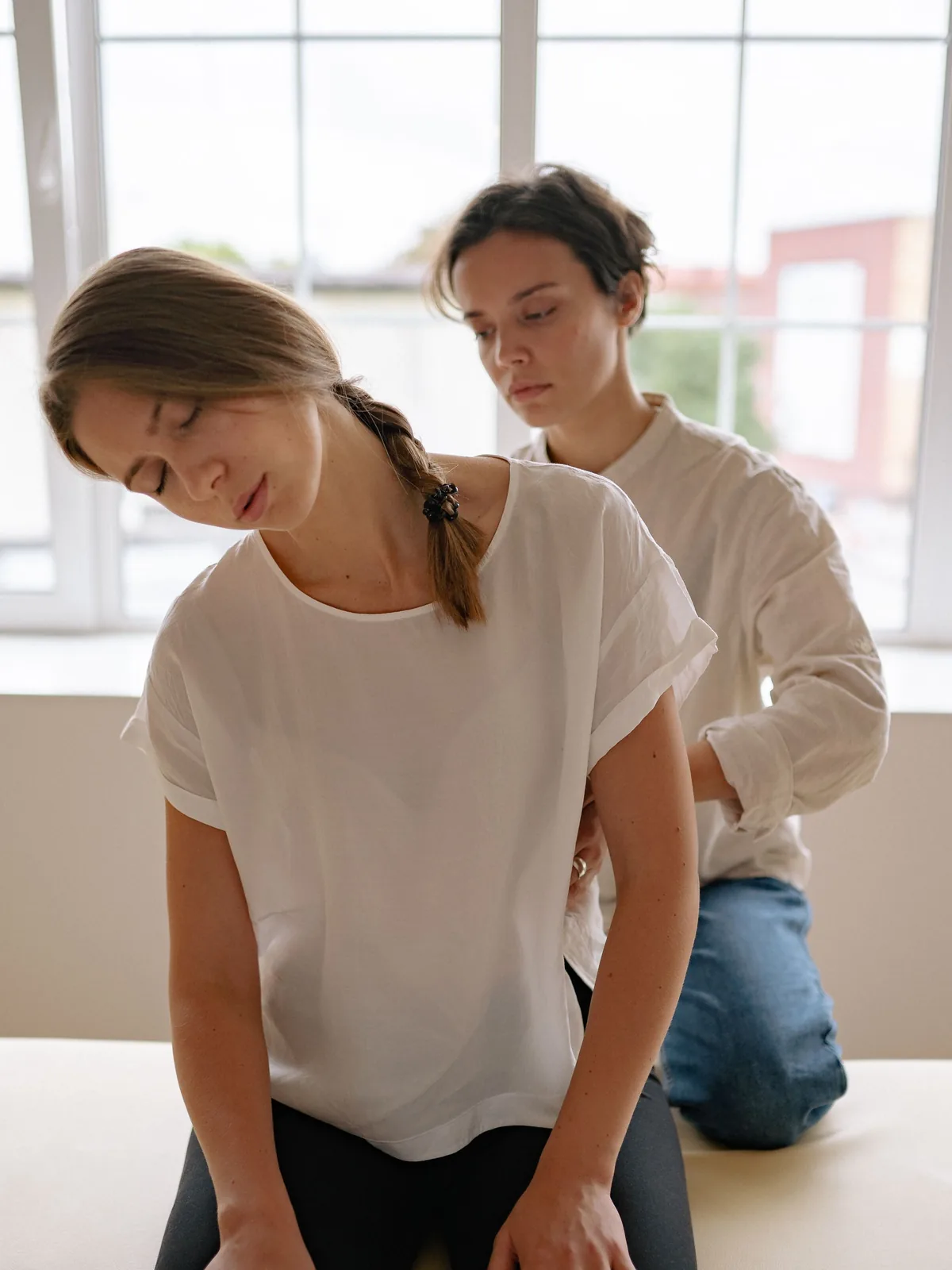
Deep tissue massage, slower and more specific
Deep tissue massage stays on a smaller area and uses slower pressure than a Swedish session. It can feel intense. You set the limit, and the work stops being useful when you brace against it.
What the session involves
Instead of traveling the whole body at an even pace, deep tissue work picks the places you name, often the shoulders, neck, lower back, hips, or calves. The stroke is shorter. The practitioner may use fingers, knuckles, or a forearm, and may ask you to breathe so the muscle is not fighting the pressure.
Oil is used more sparingly than in Swedish massage so the hands do not slide past the area. You will still be draped. The session does not have to cover every limb if you would rather spend the time on two or three places.
A full body deep tissue massage is possible when the confirmed length allows it. Covering the whole body with slow, focused pressure takes longer than a Swedish pass over the same map. If the time is short, ask the studio what can realistically be included.
Who may want this session
People request deep tissue massage when an area feels thick or tired and they want the practitioner to stay there. Athletes sometimes ask for it after training. That request is still a massage, not sports medicine, and it does not rehabilitate an injury.
Skip a firm session, or say so, if you bruise easily, if you are taking a medication that affects clotting, or if pressure has felt wrong in the past. The practitioner can lighten the work. They cannot turn the massage into medical treatment.
Deep tissue massage for back pain is a common search, and it needs a plain answer. Tightness and pain are not the same problem. Massage may feel useful when muscles feel tight. It does not treat back pain, nerve pain, or spinal injury. Get those assessed by a physician.
Session length
No length is published as a guaranteed option. Focused work often needs more time on fewer areas. Ask for the duration you want, and expect the confirmation to narrow it to what can be scheduled.
What to expect
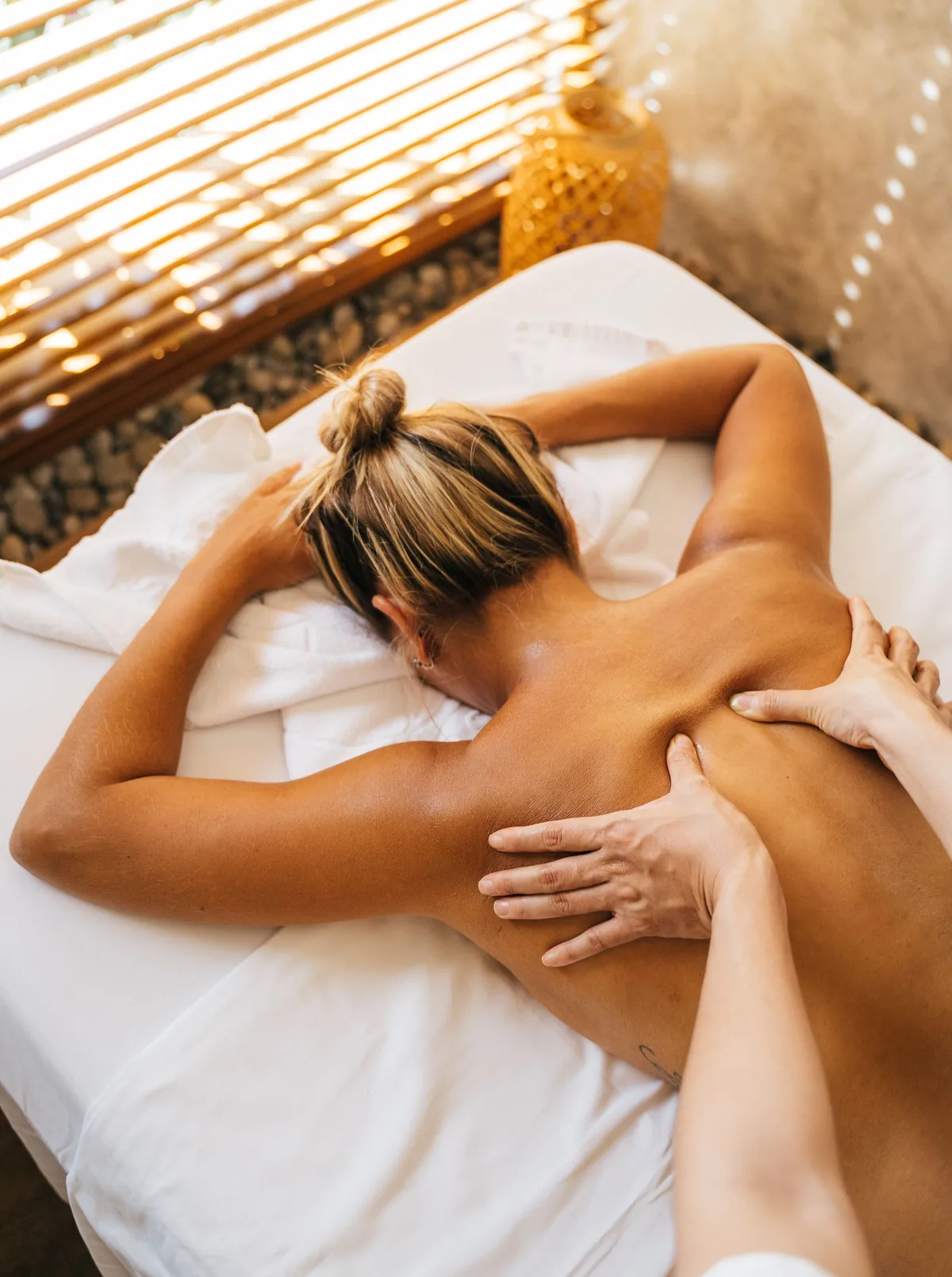
The start of the session is a short map: where it feels tight, where it hurts in a way that should not be pressed, and how firm is too firm. You should have a way to stop the pressure without a long explanation. A raised hand is enough.
You may feel tender later that day or the next morning. That soreness is common and should fade. It is not evidence that the massage corrected a medical problem. Bruising is not an intended result. If you see a bruise, avoid deep pressure there until it resolves.
Drink water if you want it. A hot bath is optional, not required. Do not stretch aggressively into a sore area the same evening.
How to prepare
Note the areas you care about before you arrive so the time is not spent guessing. Wear something you can change out of easily. If you have had surgery, a recent strain, or unexplained pain, say that in the inquiry so the studio can decline or adapt before you travel.
Practical notes
Therapeutic deep tissue massage, as the phrase is often used, still means massage. It does not mean the session is billed as physical therapy or that a diagnosis will be made. Techniques are chosen for comfort and for the muscle area you asked about, within ordinary professional limits.
If you feel sharp, electric, or worsening pain during a stroke, the stroke should stop. Continuing is not a sign of a better session.
Pricing
Ask for a deep tissue quote by phone at +1 (813) 252-4901 or by email at [email protected]. This page does not print a price. Read how pricing is handled.
Questions
What does deep tissue massage feel like?
The pace is slower than Swedish massage, and the pressure stays on a smaller area. It can feel intense. It should not feel sharp, numb, or like something you have to endure. You can ask for less pressure at any moment.
Why am I sore after a deep tissue massage?
Soreness for a day or two is common after focused pressure, especially in areas that were worked for a while. Mild tenderness is not proof that the massage helped or harmed you. Sharp pain, swelling, or bruising should be mentioned before you book again, and a physician should assess pain that worries you.
Can deep tissue massage treat back pain?
People often ask for deeper work when the back feels tight. Massage does not treat back pain, disc problems, or other medical conditions. If pain is sharp, radiating, unexplained, or follows an injury, talk with a physician before you request a session.
Is bruising normal?
Bruising is not an expected result. Tell the practitioner if pressure feels like it is pinching or scraping. If a bruise appears, skip deeper pressure in that area until it has faded, and mention it in your next inquiry.
Related sessions
The request does not hold a time.